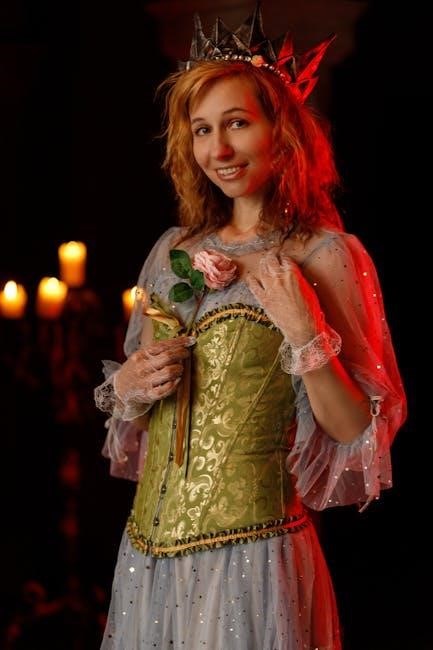
the princess and the pea pdf

The Princess and the Pea PDF: A Comprehensive Guide (Updated 2026)

Zoom facilitates seamless virtual storytelling, enhancing access to “The Princess and the Pea” PDFs through integrated screen-sharing and collaborative reading experiences․

What is “The Princess and the Pea”?

“The Princess and the Pea” is a classic fairy tale by Hans Christian Andersen, exploring themes of true royalty and sensitivity․ The story centers around a prince desiring a genuine princess, facing challenges in proving a potential bride’s noble lineage․ He devises a test: placing a pea beneath layers of mattresses and bedding․

Only a true princess, possessing refined sensitivity, would be disturbed by the pea’s presence․ This seemingly simple test becomes a symbol of discerning genuine character amidst appearances․ The tale, often enjoyed in PDF format for convenient reading, highlights the importance of inner qualities over outward displays of status․

Digital versions, including those accessible via Zoom integration for shared reading, preserve this timeless narrative for modern audiences․ The story’s enduring appeal lies in its whimsical premise and subtle commentary on societal expectations․

The Story’s Origin and Hans Christian Andersen

Hans Christian Andersen, the celebrated Danish author, published “The Princess and the Pea” in 1835 as part of a collection of fairy tales․ Andersen’s work often explored themes of social class, identity, and the search for belonging – all present in this beloved story․ While seemingly simple, the tale reflects 19th-century societal concerns about nobility and authenticity․

The story’s origins are believed to be rooted in oral folklore, with Andersen adding his unique literary flair․ Accessing the tale today is often done through convenient PDF versions, preserving Andersen’s original narrative․

Modern digital platforms, like those integrated with Zoom, allow for shared reading experiences, connecting audiences with Andersen’s timeless storytelling․ Understanding the author’s background enriches appreciation for the tale’s subtle nuances and enduring message․

Finding “The Princess and the Pea” PDFs Online

Locating PDF versions of “The Princess and the Pea” is surprisingly straightforward․ A simple web search using keywords like “Princess and the Pea PDF download” yields numerous results․ However, caution is advised due to varying quality and potential security risks․ Many online libraries and educational resource websites offer free PDF copies․

Platforms facilitating virtual interactions, such as Zoom, often link to downloadable resources, including storybooks in PDF format․ Be mindful of copyright restrictions when downloading and distributing these files․ Always prioritize reputable sources to ensure a safe and legal download experience․

Utilizing advanced search operators can refine results, focusing on verified educational domains․ Remember to scan downloaded files with antivirus software before opening them․

Legitimate Sources for Free PDFs

Several trustworthy online platforms offer free PDF versions of “The Princess and the Pea․” Project Gutenberg is a prime example, providing classic literature in digital formats, including PDF, legally and without cost․ Similarly, Internet Archive boasts a vast collection of digitized books, often including multiple editions of Andersen’s fairy tales․

Many public libraries now offer digital lending services, allowing patrons to borrow eBooks and PDFs through platforms like Libby or OverDrive․ Educational websites dedicated to children’s literature frequently provide free, downloadable stories․

Zoom’s resource center sometimes links to educational materials, potentially including storybook PDFs․ Always verify the source’s legitimacy before downloading to avoid malware or copyright infringement․

Paid PDF Versions: Benefits and Where to Find Them

Purchasing a PDF version of “The Princess and the Pea” often unlocks enhanced features․ These can include high-resolution illustrations, professionally formatted layouts optimized for various devices, and sometimes, interactive elements for a richer reading experience․ Platforms like Amazon Kindle Store, Apple Books, and Google Play Books offer paid PDF editions․

Specialized eBook retailers focusing on classic literature frequently provide curated collections, ensuring quality and accurate translations․ Some publishers offer exclusive editions with supplementary materials, such as author biographies or critical analyses․

Utilizing Zoom for book clubs allows seamless sharing of purchased PDFs during discussions, enhancing collaborative learning․ Paid versions support authors and publishers, fostering continued literary creation․

Understanding Different PDF Formats

Zoom’s platform supports diverse PDF sharing, enabling educators to present illustrated editions of “The Princess and the Pea” effectively to remote learners․

Standard PDF vs․ EPUB/MOBI Conversion

Standard PDFs maintain formatting precisely, ideal for visually rich “Princess and the Pea” editions, ensuring illustrations appear as intended across devices․ However, reflowing text can be limited․ EPUB and MOBI formats, favored by e-readers, prioritize text adaptability, adjusting font sizes and margins for optimal reading comfort on various screens․

Converting a PDF to EPUB/MOBI can sometimes introduce formatting inconsistencies, particularly with complex layouts․ While suitable for text-focused versions, illustrated PDFs might lose visual fidelity during conversion․ Zoom’s screen-sharing capabilities offer a workaround, allowing educators to display the original PDF’s layout during virtual story times, regardless of the reader’s device or preferred format․ Consider the reader’s needs and the PDF’s content when choosing a format – preservation of visuals versus reading flexibility;

PDFs with Illustrations: A Visual Experience

“The Princess and the Pea” benefits immensely from illustrated PDF versions, bringing Hans Christian Andersen’s tale to life for young readers․ High-resolution scans or digitally created artwork enhance engagement and comprehension, particularly for ESL/EFL learners․ These PDFs often feature depictions of the castle, the queen, and, crucially, the layers of mattresses and peas!

When selecting an illustrated PDF, prioritize image quality․ A blurry or pixelated image detracts from the experience․ Zoom’s screen-sharing feature is invaluable for showcasing these illustrations during remote story times, allowing all participants to appreciate the visual details․ Furthermore, interactive PDFs might include clickable elements or animations, adding another layer of immersion․ Ensure the PDF is compatible with various devices for a seamless visual experience․

Accessibility Features in “Princess and the Pea” PDFs

“The Princess and the Pea” PDFs should prioritize accessibility for all readers․ Key features include tagged PDFs, enabling screen readers to navigate the text effectively․ Adjustable font sizes and styles are crucial for visually impaired individuals, while alternative text descriptions for images benefit those using assistive technologies․ Reflowable text ensures readability on various screen sizes․

Consider PDFs offering adjustable color contrast options to aid readers with dyslexia or other visual sensitivities․ Zoom integration can further enhance accessibility by allowing real-time text magnification and screen sharing with live captioning during read-aloud sessions․ Well-structured PDFs with clear headings and logical reading order are essential․ Prioritizing these features ensures equitable access to this classic fairytale for everyone․

Analyzing PDF Content & Translations

Zoom’s platform supports diverse language learning; analyzing “The Princess and the Pea” PDFs reveals translation nuances and cultural adaptations for global audiences;

English Language Versions: Original and Modern

Zoom’s screen-sharing capabilities allow for side-by-side comparisons of various English language “Princess and the Pea” PDF versions․ Early translations, often Victorian in style, differ significantly from contemporary renditions aimed at younger audiences․

Original PDFs may retain archaic phrasing and sentence structures, reflecting the linguistic norms of Andersen’s time and initial translators․ Modern PDFs prioritize clarity and accessibility, employing simpler vocabulary and streamlined narratives․ Examining these PDFs reveals evolving interpretations of Andersen’s tale․

Furthermore, PDFs sourced from different publishers showcase variations in editorial choices, impacting the story’s tone and emphasis․ Some PDFs include annotations or critical analyses, offering deeper insights into the text’s themes and historical context․ Utilizing Zoom for collaborative reading enhances the understanding of these subtle differences․

Translated PDFs: Availability and Quality

Zoom meetings can facilitate cross-lingual discussions about “The Princess and the Pea” using translated PDF versions․ The availability of these PDFs varies greatly depending on the target language; common languages like Spanish, French, and German boast numerous options․

However, the quality of translations differs significantly․ Some PDFs feature professional, polished translations, while others rely on automated or amateur efforts, resulting in inaccuracies or awkward phrasing․ Careful evaluation is crucial․

PDFs originating from reputable publishing houses generally offer higher-quality translations․ Utilizing Zoom’s screen-sharing, comparing multiple translations of the same passage can reveal nuances lost or gained in different interpretations․ Assessing the translator’s credentials and reading reviews can also aid in selecting reliable PDFs․

Comparing Different PDF Translations

Zoom’s collaborative features are ideal for dissecting nuances within “The Princess and the Pea” PDF translations․ Direct comparison reveals how different translators interpret Andersen’s prose, impacting the story’s emotional resonance․

Focus on key phrases – the description of the pea, the queen’s skepticism, the princess’s sensitivity – and analyze how each translation renders them․ Some may prioritize literal accuracy, while others emphasize stylistic flow or cultural adaptation․

Consider the target audience; a translation for young children will differ from one intended for literary scholars․ Zoom allows simultaneous screen-sharing of multiple PDFs, facilitating side-by-side analysis․ Note variations in vocabulary, sentence structure, and overall tone to understand each translator’s choices and their effect on the narrative․

Utilizing “The Princess and the Pea” PDFs

Zoom’s screen-sharing capabilities transform “The Princess and the Pea” PDFs into interactive storytime experiences, fostering literacy and engagement for all ages․

Educational Uses: Story Time and Literacy

“The Princess and the Pea” PDF versions offer educators a versatile tool for fostering literacy and sparking imagination in young learners․ Utilizing platforms like Zoom, teachers can share the PDF directly on screen, creating a shared reading experience․ This allows for real-time discussion, character analysis, and vocabulary building․

The simplicity of a PDF format makes it easily accessible on various devices, supporting both classroom and remote learning environments․ Interactive PDFs, if available, can include comprehension questions or activities․ Furthermore, the story’s concise nature is ideal for introducing foundational literary concepts like plot, character, and setting․

Parents can also leverage these PDFs for bedtime stories, promoting a love of reading and strengthening family bonds․ The visual aspect, especially in illustrated PDFs, enhances engagement and comprehension for early readers․

PDFs for ESL/EFL Learners

“The Princess and the Pea” PDFs are exceptionally valuable resources for English as a Second or Foreign Language (ESL/EFL) learners․ The story’s relatively simple vocabulary and straightforward narrative structure make it accessible for those developing their English reading skills․ Teachers can utilize Zoom to share the PDF and facilitate interactive reading sessions, providing immediate clarification of unfamiliar words and phrases․

PDFs allow learners to easily highlight key vocabulary and annotate the text, aiding comprehension and retention․ The availability of translated PDFs (with caution regarding quality – see analysis section) can provide support for lower-level learners, though focusing on the English version is generally recommended for immersion․

Furthermore, the story’s cultural context offers opportunities to discuss societal norms and values, enriching the learning experience beyond language acquisition․ The concise length makes it a manageable and rewarding reading experience․

Printing and Physical Copies from PDFs

Downloading a “Princess and the Pea” PDF offers the convenience of creating physical copies for offline reading or classroom use․ Most PDF viewers, readily accessible via platforms like Zoom’s screen-sharing capabilities for demonstration, include a print function allowing users to select specific pages or the entire document․

Printing on cardstock can create durable, reusable story cards for young learners․ However, be mindful of copyright restrictions before distributing multiple printed copies – ensure the PDF source permits such use․

For a more tactile experience, consider printing and binding the PDF to create a small storybook․ This is particularly beneficial for children who enjoy handling physical books․ Adjusting print settings for optimal image quality is crucial, especially for PDFs containing illustrations․

PDF Security and Potential Risks

Zoom’s secure platform contrasts with potential PDF risks; always scan downloaded “Princess and the Pea” PDFs for malware before accessing content․

Avoiding Malicious PDFs: Safety Tips

When seeking “The Princess and the Pea” PDFs, prioritize caution․ Zoom’s secure environment highlights the importance of verifying PDF sources․ Always download from reputable websites, avoiding suspicious links or unsolicited emails․ Before opening, scan the PDF with updated antivirus software to detect potential malware or viruses․

Enable your PDF reader’s security features, like sandboxing, which isolates the file and limits its access to your system․ Be wary of PDFs requesting excessive permissions or prompting you to enable macros․ Regularly update your operating system and PDF reader to patch security vulnerabilities․ Consider using a virtual machine for opening PDFs from unknown sources, adding an extra layer of protection․

If a PDF behaves unexpectedly – displays errors, redirects you to unfamiliar websites, or exhibits unusual activity – close it immediately and report it․ Remember, a legitimate “Princess and the Pea” PDF shouldn’t pose a security threat if obtained responsibly․

Copyright Considerations When Downloading PDFs

Downloading “The Princess and the Pea” PDFs necessitates understanding copyright law․ Hans Christian Andersen’s work, while in the public domain in many regions, may have new translations or illustrations still under copyright․ Zoom’s platform emphasizes responsible digital citizenship, extending to respecting intellectual property․

Ensure the PDF source explicitly states it’s legally authorized for distribution; Avoid downloading from websites offering PDFs without clear copyright information or licensing details․ Utilizing PDFs from legitimate sources – libraries, Project Gutenberg, or authorized publishers – minimizes legal risks․

Sharing copyrighted PDFs without permission is illegal․ If a PDF includes modern illustrations or a unique translation, verify its usage rights before sharing it with others․ Supporting authors and publishers by purchasing legitimate copies ensures continued creation of beloved stories like “The Princess and the Pea․”

Zoom Integration for Storytelling (Related to Online Access)

Zoom dramatically enhances the experience of sharing “The Princess and the Pea” PDFs, particularly for remote story times and educational settings․ Screen sharing allows educators to display the PDF directly to participants, fostering a communal reading experience․ Annotations tools enable interactive discussions, highlighting key passages and illustrations within the PDF․

Breakout rooms facilitate smaller group analyses of the story, encouraging critical thinking and peer learning․ Zoom’s chat function allows for real-time questions and responses, creating a dynamic learning environment․ Furthermore, recording features preserve storytelling sessions for later review or for students who couldn’t attend live․

Downloading and sharing PDFs via Zoom’s file sharing capabilities streamlines access for participants, ensuring everyone has a copy for follow-up activities․

spanian the unfiltered hood life pdf

Spanian: The Unfiltered Hood Life ౼ Article Plan

Spanian’s memoir, co-authored with Christopher Kevin Au, details a harrowing journey through Sydney’s underbelly, exploring crime, addiction, and redemption—available in eBook and physical formats.

Spanian, born and raised amidst the challenging socio-economic realities of Sydney’s inner-city, has dramatically transformed from a figure entrenched in a cycle of crime and incarceration into a celebrated hip-hop artist and author. His story, powerfully recounted in “The Unfiltered Hood Life,” co-authored with Christopher Kevin Au, is a testament to the potential for change even in the most dire circumstances.

Initially known for navigating a life dominated by violence, drug addiction – particularly heroin – and lengthy prison sentences totaling thirteen years within the New South Wales correctional system, Spanian’s narrative is far from a typical success story. The memoir offers an unflinching look at the harsh realities of social housing and the systemic issues that contribute to a life on the margins.

However, the narrative doesn’t end with despair. It chronicles the pivotal moment when Spanian discovered artistic expression, specifically through music, which became a pathway to redefine his life and offer a voice to those often unheard. His rise as a viral hip-hop star is intrinsically linked to the raw honesty and gritty realism found within the pages of his memoir, captivating audiences and sparking important conversations.

Overview of “The Unfiltered Hood Life”

“The Unfiltered Hood Life,” co-authored by Spanian and Christopher Kevin Au, is a brutally honest and high-octane memoir detailing a life consumed by the harsh realities of Sydney’s underbelly. The book doesn’t shy away from depicting the gritty socio-economic struggles, the pervasive cycle of crime and violence, and the devastating grip of heroin addiction that defined much of Spanian’s early life.

The narrative meticulously chronicles thirteen years spent within the New South Wales correctional system, offering a rare and unflinching perspective on life behind bars. It’s a story of survival, resilience, and ultimately, transformation. The memoir isn’t simply a recounting of hardship; it’s an exploration of the systemic issues that contribute to a life of marginalization.

Available in eBook, audiobook, and physical editions through retailers like Booktopia and Hachette Australia, the book has garnered critical acclaim for its raw authenticity and its ability to spark crucial dialogues about social justice and rehabilitation.

The Author: Spanian — Background and Early Life

Spanian, the author of “The Unfiltered Hood Life,” emerged as a viral hip-hop artist, but his story began far removed from the spotlight. He grew up immersed in the challenging environment of Sydney’s inner-city social housing, a landscape marked by socio-economic disadvantage and limited opportunities. His early life was characterized by exposure to crime, violence, and the insidious allure of drug culture.

The memoir details a descent into a “vicious circle” of destructive behaviors, including heroin addiction, which ultimately led to extensive periods of incarceration. Before finding solace in music, Spanian faced a trajectory seemingly destined for “total annihilation.” His background is crucial to understanding the unflinching honesty and gritty realism that permeate his writing.

Through collaboration with Christopher Kevin Au, Spanian’s experiences are powerfully conveyed, offering a unique and compelling narrative of survival and self-discovery. His story is a testament to the power of artistic expression as a pathway to change.

Early Challenges and Social Housing

Spanian’s formative years were deeply rooted in the Sydney social housing system, a setting he portrays with stark honesty in “The Unfiltered Hood Life.” This environment presented a multitude of challenges, exposing him to a cycle of disadvantage and limited prospects from a young age. The memoir vividly depicts the complexities of life within these communities, highlighting the stark contrast between those who navigated the system successfully and those who succumbed to its pressures.

Growing up amidst crime and violence became normalized, shaping his worldview and influencing his early choices. The lack of positive role models and opportunities contributed to a sense of hopelessness, pushing him towards destructive paths. This backdrop is essential for understanding the subsequent struggles with addiction and the eventual entanglement with the criminal justice system.

The narrative underscores how systemic issues within social housing can perpetuate cycles of poverty and despair, impacting generations;

The Cycle of Crime and Violence

Spanian’s memoir lays bare the relentless cycle of crime and violence that ensnared him during his youth. “The Unfiltered Hood Life” doesn’t shy away from detailing his involvement in petty theft, escalating to more serious offenses, driven by desperation and a lack of alternatives. He portrays a world where violence was often the default response, a means of survival and establishing dominance within a harsh social landscape.

The book illustrates how easily individuals can become trapped in this cycle, with each transgression leading to further entanglement with the criminal justice system. This constant exposure to violence desensitized him, blurring the lines between right and wrong. The narrative emphasizes the damaging consequences of this lifestyle, not only for himself but also for his community.

Spanian reveals how this cycle ultimately paved the way for his long-term incarceration.

Drug Addiction and its Grip

Spanian’s story unflinchingly details his descent into heroin addiction, portraying it not as a moral failing, but as a consequence of trauma and circumstance. “The Unfiltered Hood Life” reveals how the drug offered a temporary escape from the harsh realities of his life, quickly spiraling into a destructive dependency. He describes the all-consuming nature of the addiction, prioritizing the need for the drug above all else – family, friends, and even his own well-being.

The memoir doesn’t glamorize drug use; instead, it exposes the brutal truth of its grip, detailing the physical and psychological toll it took on him. Spanian illustrates how addiction fueled his criminal activity, creating a vicious cycle of desperation and self-destruction.

His addiction significantly contributed to the thirteen years he spent incarcerated within the New South Wales correctional system.

Thirteen Years Behind Bars: Incarceration Experience

Spanian’s memoir dedicates significant space to his thirteen years within the New South Wales correctional system, offering a raw and unvarnished look at life inside. He doesn’t shy away from detailing the violence, the desperation, and the psychological impact of prolonged incarceration. “The Unfiltered Hood Life” portrays prison not as rehabilitation, but as a breeding ground for further trauma and entrenchment in the criminal world.

He describes the complex social dynamics within the prison walls, the constant struggle for survival, and the loss of hope. Spanian details how the system often exacerbates existing problems, rather than addressing them, contributing to a cycle of re-offending.

Despite the bleakness, it was during this time that the seeds of his artistic expression began to sprout, offering a glimmer of hope amidst the darkness.

Life Inside the New South Wales Correctional System

Spanian’s thirteen years navigating the New South Wales correctional system are depicted with brutal honesty in “The Unfiltered Hood Life;” He details the harsh realities of daily existence, from navigating prison hierarchies to the constant threat of violence. The memoir exposes a system often characterized by overcrowding, limited resources, and a lack of genuine rehabilitation programs.

Spanian recounts the psychological toll of isolation, the struggle to maintain any sense of self-worth, and the pervasive sense of hopelessness. He illustrates how the system frequently fails to address the underlying issues that contribute to criminal behavior, perpetuating a cycle of incarceration.

His experiences highlight the dehumanizing aspects of prison life and the challenges faced by inmates attempting to rebuild their lives.

The Impact of the Criminal Justice System

Spanian’s narrative powerfully critiques the Australian criminal justice system, portraying it not as a rehabilitative force, but as a significant contributor to the cycle of disadvantage and recidivism. He argues the system often exacerbates existing socio-economic issues, particularly for individuals from marginalized communities and those raised in social housing.

The memoir demonstrates how systemic failures, coupled with limited opportunities post-release, create formidable barriers to reintegration. Spanian details how the experience of incarceration can further entrench individuals in a life of crime, stripping them of hope and legitimate pathways to success.

His story serves as a stark indictment of a system that, in his view, often prioritizes punishment over genuine support and rehabilitation.

The Turning Point: Discovering Artistic Expression

Amidst a life spiraling through crime, addiction, and thirteen years of incarceration within the New South Wales correctional system, Spanian experienced a pivotal shift—the emergence of his artistic voice. This wasn’t a sudden revelation, but a gradual process of self-discovery that offered a lifeline away from total annihilation.

The memoir details how artistic expression, specifically hip-hop, provided a constructive outlet for his experiences, pain, and observations of the world around him. It became a means of processing trauma and articulating the realities of his life, offering a sense of purpose previously absent.

This creative awakening marked a turning point, transforming him from a perpetual offender into a viral hip-hop artist and author, demonstrating the transformative power of art.

The Emergence of Spanian as a Hip-Hop Artist

Following his turning point—discovering artistic expression—Spanian rapidly ascended as a viral hip-hop artist, leveraging his lived experiences into compelling and authentic music. His art became a direct reflection of “the gritty socio-economic underbelly of Sydney city,” offering a raw and unfiltered perspective.

The transition wasn’t merely a career change; it was a complete life overhaul. Music provided a pathway to redefine himself, moving away from the cycle of crime and incarceration that had defined much of his past. His lyrics resonated with audiences, offering a voice to the marginalized and unheard.

Spanian’s success demonstrates the power of art to transcend circumstance, transforming personal struggle into a platform for change and recognition.

Music as a Pathway to Change

For Spanian, music wasn’t simply an artistic outlet; it was a fundamental catalyst for personal transformation and a means of escaping a destructive cycle. Having been “trapped in a vicious circle of crime, violence, incarceration and drug addition,” his artistic emergence offered a new meaning and purpose.

His hip-hop career provided a constructive channel for expressing the trauma and realities detailed in his memoir, The Unfiltered Hood Life. It allowed him to confront his past, process his experiences, and ultimately, redefine his identity beyond the labels imposed by his former life.

Spanian’s story exemplifies how creative expression can be a powerful force for rehabilitation and social commentary, offering hope and inspiring change.

Themes Explored in the Memoir

Spanian’s The Unfiltered Hood Life delves into several complex and confronting themes, offering a raw and honest portrayal of life on the margins. Central to the narrative is the exploration of the socio-economic underbelly of Sydney city, exposing the systemic issues contributing to cycles of disadvantage.

The memoir unflinchingly examines the devastating impact of drug addiction, particularly heroin, and its role in fueling criminal activity. Furthermore, it provides a critical perspective on the Australian criminal justice system and the correctional system, highlighting its failures and consequences.

Ultimately, the book is a testament to the power of resilience, artistic expression, and the possibility of finding redemption amidst profound hardship;

Unflinching Honesty and Gritty Realism

Spanian’s memoir stands out for its remarkable unflinching honesty and gritty realism. He doesn’t shy away from detailing the harsh realities of his life, including his involvement in crime, struggles with heroin addiction, and the brutal conditions within New South Wales correctional facilities.

The narrative is devoid of romanticization, presenting a stark and often disturbing account of a life spiraling towards “total annihilation.” This uncompromising approach is a key element of the book’s power, forcing readers to confront uncomfortable truths about social inequality and the consequences of systemic failures.

This raw authenticity, coupled with Christopher Kevin Au’s collaborative writing, creates a deeply immersive and impactful reading experience.

Socio-Economic Underbelly of Sydney City

Spanian’s memoir provides a revealing glimpse into the often-overlooked socio-economic underbelly of Sydney city. The book vividly portrays life within Sydney’s social housing, highlighting the cycles of disadvantage, poverty, and limited opportunities that trap many individuals.

It exposes the stark contrast between the city’s glamorous facade and the harsh realities faced by those living on its margins. Spanian details the systemic issues that contribute to crime and addiction, offering a critical perspective on the social structures that perpetuate inequality.

The narrative doesn’t simply recount personal experiences; it serves as a broader commentary on the societal factors that shape lives and limit potential, making it a powerful social document.

The Memoir’s Reception and Impact

“Spanian: The Unfiltered Hood Life” has garnered significant attention since its release, receiving critical acclaim for its raw honesty and unflinching portrayal of a life lived on the edge. Readers have responded powerfully to Spanian’s story, praising its authenticity and emotional depth.

The book’s impact extends beyond personal narratives, sparking important discussions about social issues such as poverty, addiction, and the effectiveness of the criminal justice system. It’s prompted conversations about systemic inequalities and the need for greater support for marginalized communities.

Available through Booktopia and Hachette Australia, alongside eBook and audiobook options, the memoir continues to resonate with a wide audience, solidifying Spanian’s voice as a vital one in contemporary Australian literature.

Critical Acclaim and Reader Response

“Spanian: The Unfiltered Hood Life” has been widely praised for its unflinching honesty and gritty realism, earning accolades from reviewers and readers alike. The memoir’s power lies in its unapologetic insight into the socio-economic underbelly of Sydney city and the harsh realities of the criminal justice system.

Readers consistently highlight the book’s emotional impact, describing it as a compelling and deeply moving read. Many commend Spanian’s courage in sharing his story, noting its potential to inspire hope and facilitate understanding. The narrative’s authenticity resonates strongly, fostering empathy and prompting reflection.

The book’s success is evident in its availability across multiple platforms, including Booktopia, Hachette Australia, and digital formats, indicating a broad and engaged readership.

Influence on Discussions about Social Issues

“Spanian: The Unfiltered Hood Life” has ignited crucial conversations surrounding systemic issues within Australian society, particularly concerning social housing, the criminal justice system, and the devastating impact of drug addiction. The memoir’s raw depiction of life on the margins challenges preconceived notions and demands a critical examination of societal structures.

The book’s exploration of the cycle of crime and violence, coupled with Spanian’s personal experiences within the New South Wales correctional system, has prompted discussions about rehabilitation, incarceration rates, and the need for effective support systems.

Furthermore, the narrative’s focus on the socio-economic underbelly of Sydney sheds light on the challenges faced by marginalized communities, fostering a greater understanding of the root causes of social inequality and prompting calls for systemic change.

Key Figures Mentioned in the Book

Spanian, the central figure, narrates his own life, offering a deeply personal and unflinching account of his experiences. Crucially, Christopher Kevin Au is recognized as the co-author, playing a vital role in shaping and articulating Spanian’s story. Their collaboration brought this powerful memoir to life.

The book also prominently features Amos Phillips, whose connection to Spanian is significant, though the precise nature of their relationship is explored within the narrative itself. He appears as a key individual within Spanian’s life story.

While not directly central characters, individuals encountered within the Sydney social housing system and the New South Wales correctional system populate the narrative, representing the broader context of Spanian’s journey and the communities he navigated.

Christopher Kevin Au ౼ Co-Author and Collaboration

Christopher Kevin Au’s role extends beyond mere transcription; he is credited as the co-author of “Spanian: The Unfiltered Hood Life”, indicating a substantial collaborative effort in crafting the memoir. This partnership was instrumental in transforming Spanian’s lived experiences into a cohesive and compelling narrative.

Au likely contributed to the structure, editing, and overall presentation of the book, ensuring Spanian’s raw and honest voice resonated effectively with readers. The collaboration suggests a process of deep engagement with Spanian’s story, requiring sensitivity and skill to accurately portray his journey.

Their combined efforts resulted in a work that is both powerfully personal and broadly relevant, offering insights into the socio-economic challenges faced by individuals within Sydney’s marginalized communities. The success of the book is a testament to their effective partnership.

Amos Phillips — Role and Connection

Amos Phillips emerges as a significant figure connected to Spanian’s life and, consequently, the memoir, “The Unfiltered Hood Life”. While the precise nature of their relationship isn’t extensively detailed in readily available summaries, Phillips is explicitly named in connection with Spanian and the book’s publication by Hachette Australia.

His inclusion suggests a personal connection that likely influenced Spanian’s journey or provided support during the writing process. It’s plausible Phillips played a role in Spanian’s life prior to, during, or after his experiences with crime, addiction, and incarceration.

Further research would be needed to fully elucidate Phillips’ impact, but his presence highlights the network of individuals interwoven with Spanian’s story, adding another layer of complexity to the memoir’s narrative.

Availability and Formats

“Spanian: The Unfiltered Hood Life” is readily accessible to readers in multiple formats, catering to diverse preferences. Booktopia and Hachette Australia offer physical book editions, allowing for a traditional reading experience. For those preferring digital access, an eBook version is available, providing convenience and portability.

Furthermore, an audiobook option exists, enabling listeners to immerse themselves in Spanian’s story through narration. This format is particularly appealing for commutes or multitasking. Information suggests the book is available for download, potentially including options to read or download an ePub version on devices like iPhones.

Readers can explore previews and further details through platforms like Google Books, ensuring they are well-informed before purchasing.

eBook and Audiobook Options

“Spanian: The Unfiltered Hood Life” embraces modern reading habits with convenient eBook and audiobook formats. The eBook version provides instant access and portability, perfect for reading on the go via smartphones or tablets. Readers seeking an immersive experience can opt for the audiobook, allowing Spanian’s powerful narrative to come alive through professional narration.

Several sources mention the possibility of downloading an ePub version, catering to users of various e-readers. This digital format ensures compatibility across a wide range of devices. The availability of these options expands the book’s reach, making Spanian’s story accessible to a broader audience.

These formats complement the physical book editions offered by retailers like Booktopia and Hachette Australia.

Physical Book Editions (Booktopia, Hachette Australia)

For readers who prefer the tactile experience of a physical book, “Spanian: The Unfiltered Hood Life” is readily available through prominent Australian retailers. Booktopia lists the memoir, offering convenient online ordering and delivery across the country. Hachette Australia, the publisher, also provides physical copies, ensuring widespread distribution.

These editions feature the book’s striking cover design and offer a tangible connection to Spanian’s powerful story. Holding the book allows for a different kind of engagement with the narrative, fostering a deeper connection to the author’s experiences.

Both Booktopia and Hachette Australia offer options for browsing and purchasing, making it easy to acquire a copy and delve into Spanian’s unflinching memoir.

Where to Find More Information

Interested in learning more about Spanian and “The Unfiltered Hood Life”? Several online resources offer additional insights. Thea Soto’s Spotify podcast features insightful interviews with Spanian, providing a deeper understanding of his journey and artistic expression. You can find these discussions readily available on the Spotify platform.

The National Library of Australia Catalogue provides detailed bibliographic information about the book, including its publication details and subject classifications. Furthermore, Google Books offers a preview of the memoir, allowing potential readers to sample the content before purchasing.

These resources collectively offer a comprehensive overview of Spanian’s life, work, and the impact of his powerful memoir.

Spotify Podcast Interviews (Thea Soto)

Thea Soto’s podcast interviews with Spanian offer a compelling and intimate exploration of his life story, going beyond the pages of “The Unfiltered Hood Life”. These discussions delve into the complexities of his experiences with crime, addiction, and the Australian correctional system, providing a raw and honest perspective.

Spanian openly shares his journey of transformation, detailing the pivotal moment he discovered artistic expression as a pathway to change. Soto’s insightful questioning encourages Spanian to reflect on the socio-economic factors that shaped his early life and the challenges he faced navigating Sydney’s underbelly.

Listeners can access these captivating conversations directly on Spotify, gaining a deeper appreciation for Spanian’s resilience and the power of his story. These interviews are a valuable companion to the memoir itself.

National Library of Australia Catalogue

The National Library of Australia Catalogue provides detailed bibliographic information for “Spanian: The Unfiltered Hood Life”, co-authored with Christopher Kevin Au. The catalogue entry highlights the memoir’s unflinching portrayal of life within Sydney’s social housing system and the cyclical nature of crime and incarceration.

It notes Spanian’s thirteen years spent within the New South Wales correctional system, a period marked by struggles with heroin addiction. The catalogue emphasizes the book’s exploration of the “damning price” paid for a life entangled in violence and substance abuse.

Researchers and readers can utilize the catalogue to locate the book and access related resources. The entry serves as a valuable record of this significant Australian memoir, documenting its contribution to discussions surrounding social issues and the criminal justice system.

Google Books Preview

Google Books offers a preview of “Spanian: The Unfiltered Hood Life”, allowing potential readers a glimpse into the powerful narrative penned by Spanian and Christopher Kevin Au. The preview showcases the memoir’s raw and honest depiction of a life spiraling through crime, violence, and addiction.

Readers can sample excerpts detailing Spanian’s experiences with heroin addiction and his extensive thirteen-year incarceration within New South Wales jails. The preview highlights the turning point in his life – the emergence of artistic expression that offered a pathway to change and purpose.

This feature provides a valuable opportunity to assess the book’s style and content before purchasing, confirming its unflinching realism and gritty portrayal of Sydney’s socio-economic underbelly. It’s a useful tool for researchers and anyone interested in the memoir’s themes.

the crucible pdf

The Crucible PDF: A Comprehensive Guide (Updated 04/07/2026)

What is “The Crucible” and Why the PDF Format?

Arthur Miller’s “The Crucible” is a seminal play, a powerful dramatization of the Salem witch trials, and a compelling exploration of societal hysteria and individual conscience. Its enduring relevance makes it a frequent subject of study, driving demand for accessible formats like the PDF.

The PDF format offers several advantages for readers and students. It preserves the text’s formatting, ensuring a consistent reading experience across various devices. Crucially, given upcoming content migration limitations – specifically, the end of Confluence Cloud and SharePoint Online migrations after June 1, 2024 – PDFs become a primary method for content preservation.

Arthur Miller’s “The Crucible”: A Brief Overview

“The Crucible,” penned by Arthur Miller, debuted in 1953, quickly establishing itself as a cornerstone of American drama. The play unfolds during the Salem witch trials of 1692, but transcends a simple historical recounting. It’s a layered narrative examining the dangers of mass hysteria, false accusations, and the erosion of individual liberties under pressure.

The story centers on the tumultuous events sparked by accusations of witchcraft amongst the young women of Salem; John Proctor, a farmer, becomes a central figure as he grapples with his own moral failings and the escalating injustice. The play’s power lies in its allegorical resonance, prompting reflection on societal anxieties.

Accessing the play, often through PDF formats, is increasingly important as content migration deadlines approach. With migrations to platforms like Confluence Cloud ending in June 2024, PDF archives will become essential for continued study and preservation of this literary masterpiece.

Historical Context: The Salem Witch Trials

The Salem witch trials, occurring in 1692 Massachusetts, were a dark period fueled by religious extremism, fear, and social tensions. Triggered by accusations from young women, the trials led to the imprisonment of over 200 people and the execution of twenty, primarily by hanging. These events stemmed from a deeply Puritanical society grappling with anxieties about sin, the devil, and societal upheaval.

The accusations, often based on spectral evidence – visions and dreams – quickly spiraled out of control, creating a climate of paranoia. Individuals were pressured to confess, often implicating others to save themselves. The trials ultimately exposed the fragility of justice and the dangers of unchecked authority.

Understanding this historical backdrop is crucial when studying “The Crucible,” particularly when accessing the text via PDF. As digital migrations conclude in June 2024, preserving historical context within accessible PDF archives becomes paramount for future research and understanding.

The Crucible as an Allegory for McCarthyism

Arthur Miller wrote “The Crucible” in 1953, during the height of McCarthyism – a period of intense anti-communist suspicion in the United States. The play isn’t a literal retelling of the Salem witch trials, but a powerful allegory for the political climate of the time. Miller drew parallels between the accusations of witchcraft and the unsubstantiated claims of communist affiliation leveled against individuals.

The relentless questioning, the pressure to name names, and the destruction of reputations in the play mirrored the tactics employed by Senator Joseph McCarthy and the House Un-American Activities Committee (HUAC). Accessing the play in PDF format allows for focused study of these allegorical connections.

As digital archives, like PDFs, become the primary means of content preservation after June 2024, understanding Miller’s intent remains vital. The play serves as a cautionary tale about the dangers of mass hysteria and the erosion of civil liberties.

Finding a Reliable “Crucible” PDF Online

Reputable educational institutions and online libraries often provide access to verified PDFs for academic purposes. Project MUSE, produced by Johns Hopkins University Press, is a valuable resource for scholarly articles related to the play, potentially linking to reliable text sources.

Always prioritize sources that clearly indicate copyright compliance. Be wary of websites offering free downloads without proper attribution or licensing information. A legitimate PDF ensures an accurate and legally obtained version of Miller’s work.

Legality and Copyright Considerations of PDF Downloads

Downloading “The Crucible” PDF necessitates understanding copyright law. Arthur Miller’s work remains protected, meaning unauthorized distribution constitutes infringement. Obtaining a PDF from unofficial sources risks violating these rights, potentially leading to legal repercussions.

Consider fair use guidelines for educational purposes, but always cite the source appropriately. Utilizing resources like Project MUSE, which collaborates with established publishers, offers a legally sound pathway to accessing scholarly materials related to the play and its text.

Free Online Resources for Reading “The Crucible”

While a dedicated “Crucible” PDF download might present copyright challenges, several legitimate avenues offer free online access to the play’s text. Project Gutenberg often hosts classic literature, potentially including Miller’s work, though availability fluctuates. Many educational institutions provide digital access to students enrolled in relevant courses.

Exploring online libraries and open-source text repositories can yield results, but always confirm the source’s legality and reliability. Scholarly articles on Project MUSE may also offer excerpts or analyses referencing the play’s text.

Paid PDF Versions: Where to Purchase

For a guaranteed legitimate and high-quality “Crucible” PDF, purchasing from established booksellers is recommended. Major online retailers like Amazon and Barnes & Noble consistently offer digital versions for immediate download. These purchases ensure you receive a legally compliant copy, supporting the author’s and publisher’s rights.

Ensure the retailer offers secure payment options and a clear return policy. Purchasing directly from the publisher’s website is another reliable option, often providing exclusive content or discounts.

Analyzing the Characters in “The Crucible”

A readily accessible “Crucible” PDF facilitates in-depth character analysis, crucial for academic study and comprehension. Examining figures like John Proctor, Abigail Williams, and Reverend Hale reveals complex motivations and moral struggles central to Arthur Miller’s work.

Scholarly articles, accessible through resources like Project MUSE (produced by Johns Hopkins University Press), offer further insights into character interpretations, enriching your understanding.

John Proctor: A Tragic Hero

A digital “Crucible” PDF streamlines the study of John Proctor’s arc, highlighting his descent from a flawed man to a tragic hero. His internal conflict – battling guilt over Abigail Williams and striving for integrity – is powerfully portrayed within the text.

The PDF format enables close reading, allowing students to trace Proctor’s evolving moral compass and his ultimate sacrifice. Annotating the text reveals the weight of his decisions and the societal pressures that contribute to his downfall. Accessing a searchable PDF becomes increasingly important as migration options to Confluence Cloud or SharePoint Online cease after June 1, 2024, leaving only offline archives.

Scholarly resources, like those found on Project MUSE, provide critical analyses of Proctor’s heroism and its complexities.

Abigail Williams: The Catalyst of Chaos

A readily available “Crucible” PDF facilitates a detailed examination of Abigail Williams’ manipulative nature, revealing her as the central instigator of the Salem witch trials. The digital format allows for focused analysis of her dialogue and actions, exposing her motivations and the devastating consequences of her deceit.

Resources like Project MUSE offer scholarly perspectives on Abigail’s character and her role as a symbol of unchecked power.

Reverend Hale: The Evolving Moral Compass

Accessing “The Crucible” in PDF format enables a close study of Reverend Hale’s transformation, charting his journey from confident witch-hunt investigator to a man grappling with profound moral doubt. The digital text allows for easy referencing of his pronouncements and subsequent recantations, highlighting his evolving perspective.

With content migration deadlines approaching (June 2024), and access shifting to offline archives like PDFs, students can meticulously analyze Hale’s internal conflict and his eventual condemnation of the trials. The searchable PDF format aids in tracing the development of his conscience and his desperate attempts to rectify the injustice.

Scholarly articles, potentially found via Project MUSE, provide deeper insights into Hale’s symbolic representation of intellectual honesty and the dangers of rigid belief.

Key Themes Explored in “The Crucible”

The searchable nature of a PDF enables efficient tracing of how mass panic fuels false accusations, and how societal pressures dictate individual choices. Examining the text digitally, alongside scholarly resources like those available through Project MUSE, deepens understanding of these complex dynamics.

Furthermore, the PDF format supports detailed analysis of how characters prioritize social standing over truth, and the devastating consequences of flawed judicial processes.

Hysteria and Mass Panic

The ease of searching within a PDF highlights the escalating accusations and the swift spread of paranoia. Readers can pinpoint instances where individual anxieties morph into collective delusion, fueled by Abigail Williams’ manipulative tactics.

Analyzing the text digitally, alongside academic resources like Project MUSE, reveals how Miller portrays the dangers of unchecked emotion and the fragility of truth in times of crisis.

Reputation and Social Standing

The PDF format allows for focused analysis of Proctor’s struggle to reconcile his past transgression with his present integrity, and how his reputation impacts the court’s perception of his testimony. Abigail weaponizes accusations to elevate her social standing, exploiting the community’s fear of scandal.

Scholarly articles, accessible through resources like Project MUSE, further illuminate Miller’s commentary on the importance of honor and the destructive power of societal judgment, all readily available within a digital PDF.

Justice and Injustice

The PDF format enables close reading of courtroom scenes, revealing how spectral evidence and personal vendettas supersede due process. Proctor’s desperate attempts to expose Abigail’s deceit underscore the systemic injustice plaguing Salem. Examining the text digitally allows for annotation and focused analysis of key passages.

Resources like Project MUSE offer scholarly perspectives on Miller’s exploration of legal fallibility and the dangers of unchecked authority, enriching understanding accessible through the PDF’s portability and searchability.

“The Crucible” and its Relevance Today

The themes of mass hysteria, false accusations, and political manipulation resonate deeply with modern concerns about “fake news,” social media echo chambers, and abuses of power. Accessing the play via PDF allows for convenient comparison with current events, fostering critical thinking.

Scholarly resources, like those found on Project MUSE, demonstrate the play’s continued relevance in academic discourse, offering insights into its allegorical connections to historical and present-day injustices, all easily accessible through a digital PDF.

Project MUSE and Access to Scholarly Articles (2025)

Project MUSE, produced by Johns Hopkins University Press and The Sheridan Libraries, provides invaluable scholarly articles analyzing “The Crucible.” Accessing these resources often complements reading the play itself, and a convenient PDF version of the text enhances research capabilities.

Researchers frequently utilize PDFs for annotation and close reading, making a digital copy essential for academic study. Project MUSE’s database offers critical perspectives on the play’s historical context, allegorical interpretations, and enduring relevance – all enriching the understanding gained from the PDF.

The Crucible in Academic Studies: Common Essay Topics

Students frequently encounter “The Crucible” in academic settings, prompting essays exploring its complex themes. A readily available PDF version of the play facilitates in-depth textual analysis, crucial for crafting well-supported arguments.

Furthermore, essays often examine the characters of John Proctor, Abigail Williams, and Reverend Hale, requiring close reading of their dialogue and motivations – easily achieved with a digital PDF copy alongside scholarly resources like those found on Project MUSE (2025).

Understanding the Play’s Structure and Literary Devices

Analyzing Arthur Miller’s “The Crucible” requires understanding its dramatic structure and masterful use of literary devices. A digital PDF version of the text proves invaluable for this purpose, enabling students to annotate and closely examine the play’s four acts.

Furthermore, the play’s dialogue is rich in subtext and metaphor, demanding careful consideration. Utilizing a PDF alongside academic resources, such as those available through Project MUSE (2025), enhances comprehension and critical thinking.

PDF Accessibility Features for Students

Features like text-to-speech compatibility and adjustable font sizes cater to diverse learning needs. Annotation tools within PDF readers facilitate active reading and note-taking, supporting deeper engagement with Miller’s work. Access to scholarly articles via platforms like Project MUSE (2025) complements PDF study.

Ensuring the PDF is properly tagged for screen readers is essential for students with visual impairments, promoting inclusive learning.

Alternatives to PDF: Online Text and E-book Formats

While PDFs offer convenience, exploring alternatives to accessing “The Crucible” can broaden study options. Online text versions provide immediate access without requiring downloads, though formatting may vary. E-book formats, like EPUB or Kindle, often feature adjustable fonts and built-in dictionaries, enhancing readability and comprehension.

Ultimately, the best format depends on individual preferences and study habits, but diversifying beyond solely PDF ensures continued access to Miller’s powerful play.